
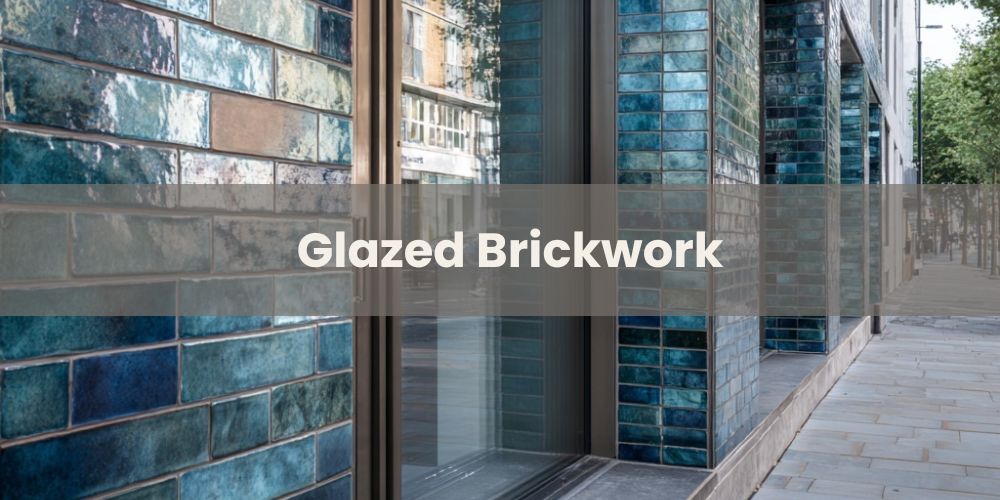
Brickwork Contractors London provides glazed brickwork construction, repair, replacement, restoration, and detailing for commercial buildings across London and the South East. Glazed brickwork uses ceramic-faced brick units to create durable, cleanable, colour-stable, and visually controlled masonry surfaces where appearance, hygiene, moisture resistance, impact tolerance, joint quality, and edge detailing all affect long-term performance. It includes glazed brick facades, entrance walls, shopfront returns, internal feature walls, public-use corridors, hospitality areas, transport-facing interiors, service-zone walls, plinths, reveals, piers, dados, tiled brick interfaces, glazed corner units, cappings, and junctions with standard brickwork, stone, render, cladding, glazing, doors, signage, and internal finishes.
Glazed brickwork in London and the South East operates under commercial conditions that directly affect unit selection, setting out, joint consistency, surface protection, cleaning method, impact resistance, and moisture behaviour. Inner London projects often involve occupied frontages, retained masonry, pavement-facing entrances, restricted access, public-facing interiors, older wall substrates, altered openings, and commercial spaces where the glazed surface must remain clean, aligned, and presentable under daily use. Outer London and South East commercial settings often involve school buildings, office refurbishments, hospitality fit-outs, business park entrances, warehouse office areas, service corridors, boundary-facing walls, and new commercial additions where glazed brickwork must coordinate with blockwork, brickwork, glazing, doors, drainage, signage, lighting, M&E penetrations, wall protection, and internal fit-out. In these conditions, glazed brickwork performance is determined by how accurately the units are set out, how consistently joints are formed, how well edges and openings are protected, and how the finished surface manages cleaning, moisture, impact, and commercial traffic.
- Glazed surface durability and cleanability → glazed brickwork depends on intact ceramic faces, consistent surface finish, stain-resistant joints, suitable cleaning methods, protected arrises, and compatible pointing to preserve the wall’s visible and hygienic performance → surface failure develops when abrasive cleaning, harsh chemicals, open joints, chipped glaze, poor protection, or incompatible repair materials damage the face of the unit → staining, dull patches, exposed body material, difficult cleaning, visible wear, and premature replacement increase when glazed brickwork is not specified and maintained as a finished surface system.
- Setting out, bond rhythm, and colour control → glazed brickwork places high visual demand on course alignment, joint width, bond pattern, unit size, corner formation, colour batch consistency, reveal setting, and transition into adjoining materials → small dimensional errors become obvious because glazed units reflect light and make uneven joints, cut edges, poor corners, and inconsistent courses more visible across commercial entrances, feature walls, corridors, and frontage returns → patchwork appearance, alignment disputes, poor finish quality, and avoidable rebuilding increase when glazed brickwork is not set out with tighter visual control.
- Impact, abrasion, and public-use pressure → glazed brickwork in commercial settings is often exposed to customer movement, school circulation, service traffic, cleaning equipment, trolleys, deliveries, door swings, corner impact, and repeated contact at low wall levels → damage increases when vulnerable arrises, external corners, plinths, reveals, entrance returns, and service-zone walls are built without considering protection, unit strength, corner detailing, and repair access → chipped units, cracked corners, exposed edges, scuffed finishes, unsafe sharp arrises, and recurring local repairs develop.
- Moisture, jointing, and substrate compatibility → glazed brickwork must coordinate impervious ceramic faces with mortar permeability, backing wall condition, DPCs, movement allowance, cavity or solid-wall behaviour, cleaning water, condensation risk, and drying routes behind or between units → performance problems occur when water is trapped behind dense surfaces, joints are too hard or open, substrates are damp, movement is restrained, or glazed units are tied into older masonry without understanding moisture behaviour → damp tracking, salt staining, joint failure, glaze-edge cracking, trapped moisture, and premature wall deterioration increase.
- Openings, corners, and interface detailing → glazed brickwork becomes vulnerable around doors, shopfronts, windows, service penetrations, signage fixings, lighting points, ventilation routes, plinths, wall caps, internal corners, external returns, and junctions with standard brickwork, render, cladding, stone, plaster, or joinery → local failure develops when cuts are exposed, fixings crack units, sealants stain the glaze, penetrations are poorly sleeved, or movement between materials is ignored → broken edges, water entry, dirty seal lines, cracked returns, loose units, and visible interface defects increase.
Brickwork Contractors London delivers glazed brickwork as a coordinated masonry finish and wall-performance service, assessing wall function, glazed unit type, colour and batch control, bond pattern, setting-out accuracy, mortar compatibility, joint profile, substrate condition, moisture behaviour, DPC and cavity requirements, impact zones, corner details, reveal formation, service penetrations, cleaning sensitivity, access constraints, commercial occupancy, and adjoining trade interfaces before defining the correct construction, repair, replacement, restoration, repointing, cleaning, or facade-integration strategy.